Call us now :07971670859
 Send Inquiry
 Send Inquiry
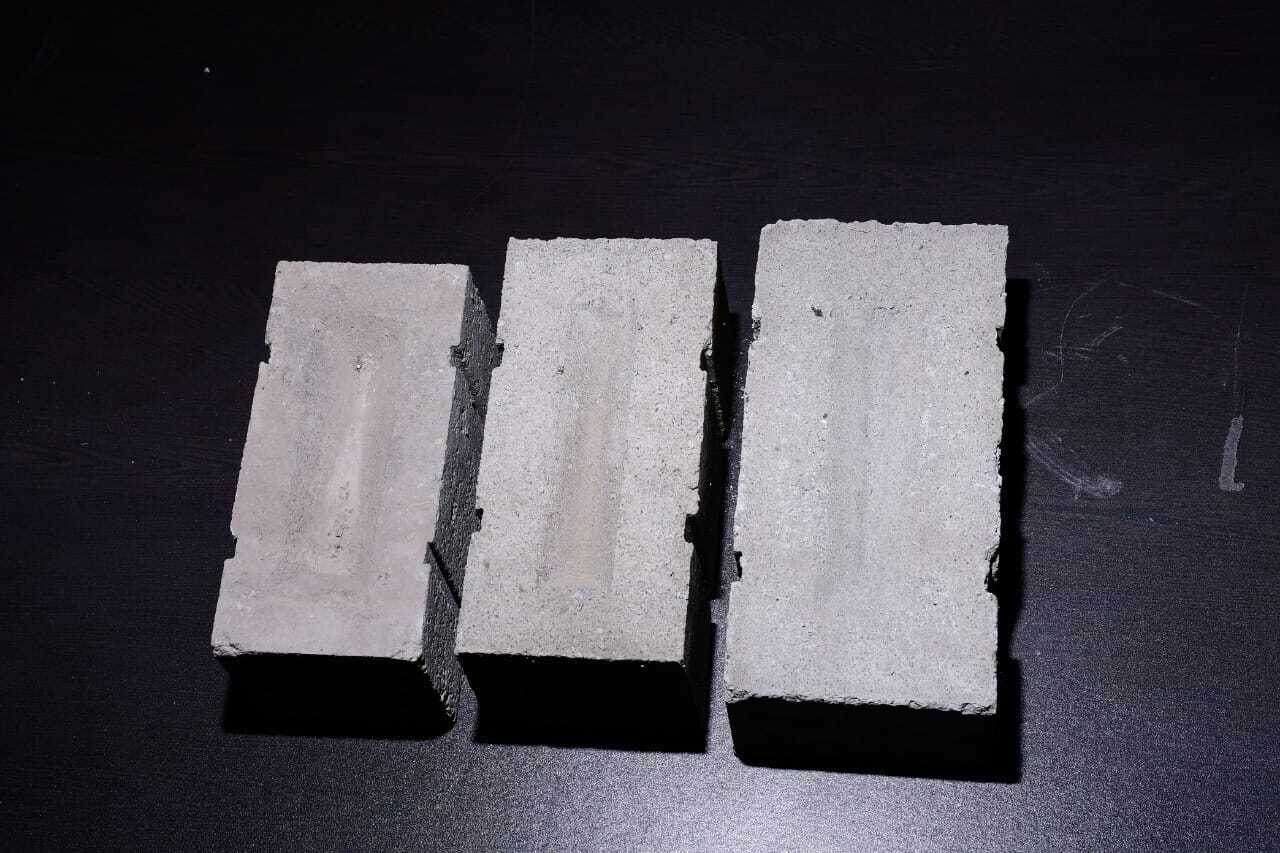
Fly Ash Bricks Vs Red Bricks
Price 5 INR/ Piece
MOQ : 3000 Pieces
Fly Ash Bricks Vs Red Bricks Specification
- Working Life
- Fly Ash Bricks: 100 years approx; Red Bricks: 50-60 years approx
- Water Absorption
- Fly Ash Bricks: 9-12%; Red Bricks: 20-25%
- Compressive Strength
- Fly Ash Bricks: 7.5-10 N/mm; Red Bricks: 3.5 N/mm min
- Porosity (%)
- Fly Ash Bricks: Low (8-12%); Red Bricks: High (20-35%)
- Drying Shrinkage
- Fly Ash Bricks: 0.15%; Red Bricks: 0.20%
- Dimension (L*W*H)
- Fly Ash Bricks: 230 x 110 x 75 mm; Red Bricks: 190 x 90 x 90 mm
- Bricks Type
- Fly Ash Bricks: Solid; Red Bricks: Solid
- Material
- Fly Ash Bricks: Fly ash, cement, sand, water; Red Bricks: Natural clay
- Type
- Fly Ash Bricks: Machine made; Red Bricks: Traditionally hand or machine made
- Color
- Fly Ash Bricks: Light grey; Red Bricks: Red
- Size
- Fly Ash Bricks: 230 mm x 110 mm x 75 mm (approx); Red Bricks: 190 mm x 90 mm x 90 mm (approx)
- Shape
- Fly Ash Bricks: Rectangular; Red Bricks: Rectangular
- Porosity
- Fly Ash Bricks: Less porous; Red Bricks: More porous
- Thickness
- Fly Ash Bricks: 60-80 mm approx; Red Bricks: 70-100 mm approx
- Technics
- Fly Ash Bricks: Autoclaved/cured; Red Bricks: Fired in kilns
- Feature
- Fly Ash Bricks: Uniform size, smooth finish, eco-friendly, less water usage, cost-effective; Red Bricks: Uneven finish, high water absorption, traditional look, commonly available
- Weight
- Fly Ash Bricks: Lighter; Red Bricks: Heavier
- Fire Resistance
- Fly Ash Bricks: High; Red Bricks: High
- Resistance to Salts
- Fly Ash Bricks: Resistant; Red Bricks: Prone to salt attack
- Thermal Insulation
- Fly Ash Bricks: Moderate; Red Bricks: High
- Usage
- Fly Ash Bricks: Suitable for load-bearing/non-load-bearing walls; Red Bricks: Multi-purpose walls
- Sound Insulation
- Fly Ash Bricks: Moderate; Red Bricks: Good
- Eco-Friendly
- Fly Ash Bricks: Yes; Red Bricks: No
- Smoothness
- Fly Ash Bricks: High; Red Bricks: Low
- Efflorescence
- Fly Ash Bricks: Low; Red Bricks: High
- Cost
- Fly Ash Bricks: Lower cost; Red Bricks: Higher cost
Fly Ash Bricks Vs Red Bricks About
Best Fly-Ash Bricks Manufacturer In Indore
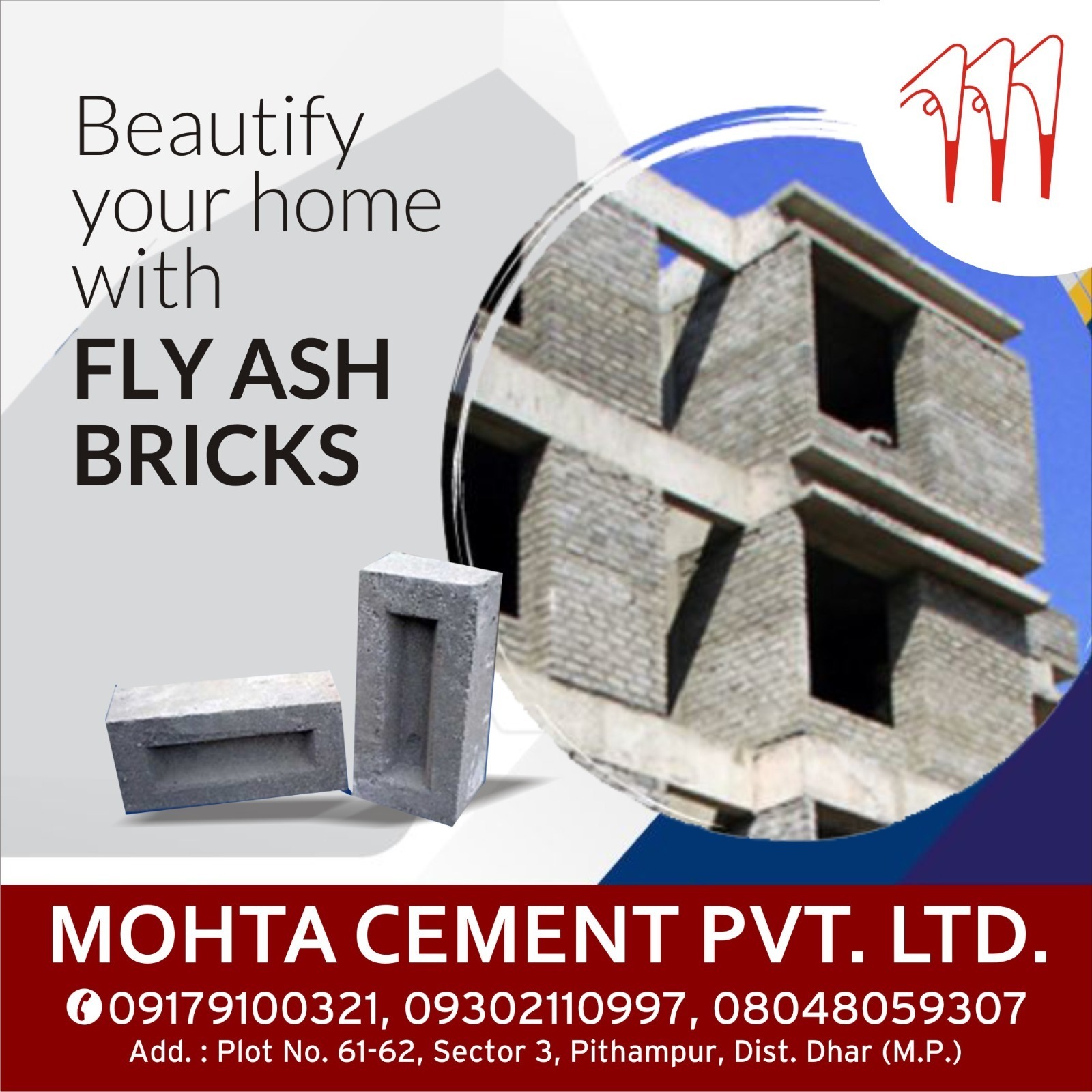
Looking for high-quality fly ash bricks at affordable prices? Mohta Cement Pvt. Ltd. can be your trusted partner for quality construction materials and your one-stop shop for all your fly ash brick needs. We offer a wide variety of fly ash bricks, all manufactured to the highest standards. Mohta fly ash bricks are strong and durable, lightweight and easy to handle, eco-friendly and sustainable and affordable and cost-effective. Contact Mohta Cement Pvt. Ltd. today to buy these flyash bricks at the best price. We also provide a variety of other construction materials, including fly ash powder.
Product details
|
Country of Origin |
Made in India |
|
Usage/Application |
Side Walls |
|
Color |
Grey |
|
Resistance Durability |
Heat Resistant,Water Resistant |
|
Shape |
Rectangular |
|
Size |
Custom |
Eco-Friendliness and Material Benefits
Fly ash bricks are an eco-friendly alternative, utilizing industrial waste such as fly ash, which reduces landfill and environmental impact. Their manufacturing process uses less water and achieves smooth finishes with uniform sizes. In contrast, red bricks are produced from natural clay and require significant energy for kiln firing, resulting in higher water usage and less sustainability. Their uneven finish and higher porosity make them less resistant to salts and efflorescence.
Structural Performance and Longevity
Fly ash bricks boast superior compressive strength (7.5-10 N/mm2) compared to red bricks (minimum 3.5 N/mm2), demonstrating their resilience in load-bearing structures. Their estimated working life is up to 100 years, nearly double that of red bricks. The lower porosity and controlled drying shrinkage of fly ash bricks minimize water absorption, extending their durability and preserving structural integrity over time.
Application and Cost Efficiency
Fly ash bricks are highly suitable for both load-bearing and non-load-bearing walls due to their light weight and smooth finish, offering a cost-effective solution for construction projects. Their production process gives a uniform appearance, making them favorable for modern buildings. Conversely, red bricks, being heavier and absorbed more water, are commonly used in multipurpose walls, but entail higher costs and require extra finishing efforts.
FAQ's of Fly Ash Bricks Vs Red Bricks:
Q: How do fly ash bricks and red bricks differ in terms of thermal insulation?
A: Fly ash bricks offer moderate thermal insulation, making them suitable for most climates, while red bricks provide high thermal insulation, which is beneficial for external walls exposed to direct sunlight.Q: What are the eco-friendly advantages of using fly ash bricks over red bricks?
A: Fly ash bricks incorporate industrial waste material, reducing landfill accumulation and supporting sustainability. Their manufacturing process uses less water and energy compared to red bricks made from natural clay and fired in energy-intensive kilns.Q: When should fly ash bricks be preferred over red bricks in construction projects?
A: Fly ash bricks are recommended for projects that prioritize eco-friendliness, uniform wall finish, lower costs, and longer building life, especially for load-bearing and non-load-bearing walls in modern construction.Q: Where are the typical applications for red bricks in buildings?
A: Red bricks are widely used in the construction of multipurpose walls due to their high thermal and sound insulation properties, traditional aesthetics, and easy availability, making them suitable for both internal and external building walls.Q: What is the process used to manufacture fly ash bricks compared to red bricks?
A: Fly ash bricks are machine-made using autoclaving or curing, ensuring consistent size and shape. Red bricks are formed from natural clay and typically fired in kilns, a process that may result in uneven sizes and finishes.Q: How does the water absorption of fly ash bricks compare to red bricks and why does it matter?
A: Fly ash bricks absorb less water (9-12%) compared to red bricks (20-25%), which reduces the risk of dampness, efflorescence, and structural weaknesses over time, making them more durable in moist environments.Q: What are the benefits in terms of cost and longevity when choosing fly ash bricks over red bricks?
A: Fly ash bricks are more cost-effective due to lower production expenses and maintenance needs. With an estimated working life of around 100 years, they outlast red bricks, which typically last between 50-60 years.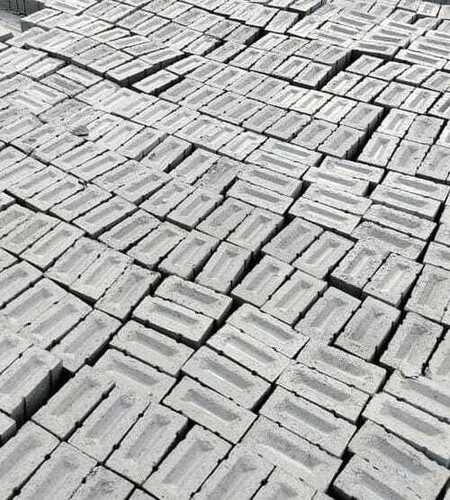
Tell us about your requirement

Price:
Quantity
Select Unit
- 50
- 100
- 200
- 250
- 500
- 1000+
Additional detail
Mobile number
Email

More Products in Eco Bricks Category
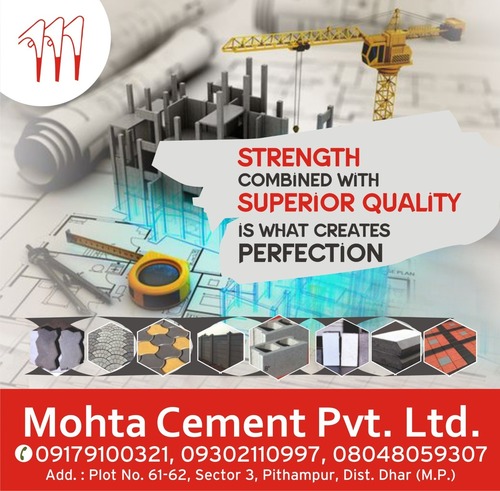
Concrete Products
Price 5 INR / Piece
Minimum Order Quantity : 3000 Pieces
Color : Multicolor
Shape : Rectangular
Bricks Type : Other
Material : Other
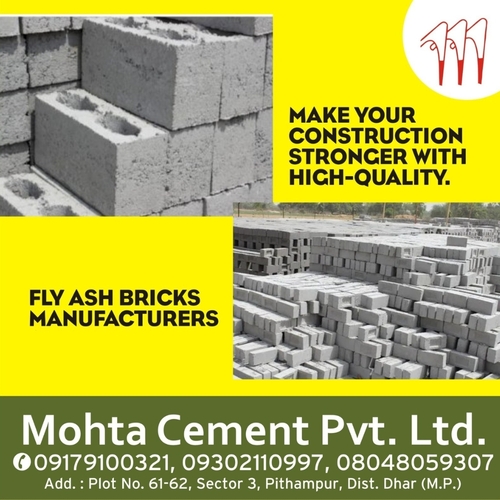
Eco Friendly Fly Ash Blocks
Price 5 INR / Piece
Minimum Order Quantity : 1000 Pieces
Color : Other , Grey
Shape : Rectangular
Bricks Type : Other, Solid
Material : Other, Fly Ash, Cement, Sand, Water
Concrete ECO Bricks
Price 6.5 INR
Minimum Order Quantity : 10000
Color : Gray
Shape : Rectangle
Bricks Type : Concrete Bricks
Best Eco- Friendly Concrete Blocks and Fly Ash Bricks
Price 5 INR / Piece
Minimum Order Quantity : 3000 Pieces
Color : Gray
Shape : Rectangular
Bricks Type : Concrete Bricks
Material : Sandstone

"We are only dealing in Madhya Pradesh"

 Send Inquiry
Our Products


Samyak Tower, 16/3, Old Palasia,Indore - 452018, Madhya Pradesh, India

Mr Gaurav Mohta
(Director)
Mobile :07971670859
 Send Inquiry
 Send SMS
 Call Me Free
Developed and Managed by Infocom Network Private Limited.


