Call us now :07971670859
 Send Inquiry
 Send Inquiry
Fly Ash Bricks Vs Traditional Bricks
Price 5 INR/ Piece
MOQ : 3000 Pieces
Fly Ash Bricks Vs Traditional Bricks Specification
- Working Life
- Fly Ash Brick: Long; Traditional Brick: Short
- Dimension (L*W*H)
- Fly Ash Brick: 230 x 110 x 75 mm; Traditional Brick: 230 x 110 x 90 mm
- Compressive Strength
- Fly Ash Brick: 80-120 kg/cm²; Traditional Brick: 30-35 kg/cm²
- Drying Shrinkage
- Fly Ash Brick: < 0.15%; Traditional Brick: < 0.50%
- Porosity (%)
- Fly Ash Brick: 10-15%; Traditional Brick: 15-25%
- Water Absorption
- Fly Ash Brick: 6-12%; Traditional Brick: 15-20%
- Bricks Type
- Fly Ash Brick: Solid; Traditional Brick: Solid
- Material
- Fly Ash Brick: Fly ash, cement, sand, gypsum; Traditional Brick: Clay
- Type
- Fly Ash Brick: Machine Made; Traditional Brick: Handmade
- Color
- Fly Ash Brick: Greyish; Traditional Brick: Reddish
- Size
- Fly Ash Brick: 230 x 110 x 75 mm; Traditional Brick: 230 x 110 x 90 mm
- Shape
- Fly Ash Brick: Rectangular; Traditional Brick: Rectangular
- Porosity
- Fly Ash Brick: Less; Traditional Brick: High
- Thickness
- Fly Ash Brick: 70-75 mm; Traditional Brick: 90-100 mm
- Technics
- Fly Ash Brick: Autoclaved/Cured; Traditional Brick: Fired in kiln
- Feature
- Fly Ash Brick: Eco-friendly, cost effective; Traditional Brick: Conventional
- Fire Resistance
- Fly Ash Brick: High; Traditional Brick: Moderate
- Thermal Conductivity
- Fly Ash Brick: Low; Traditional Brick: High
- Curing Time
- Fly Ash Brick: 7-14 days; Traditional Brick: 24-48 hours after firing
- Toxic Emission
- Fly Ash Brick: No toxic emission; Traditional Brick: Emits gases during firing
- Weight
- Fly Ash Brick: Less; Traditional Brick: More
- Surface Finish
- Fly Ash Brick: Smooth; Traditional Brick: Rough
- Salinity Effect
- Fly Ash Brick: Resistant; Traditional Brick: Prone to saline attack
- Efflorescence
- Fly Ash Brick: Low; Traditional Brick: High
- Sound Insulation
- Fly Ash Brick: Good; Traditional Brick: Moderate
Fly Ash Bricks Vs Traditional Bricks About
Eco-Friendly Fly Ash Bricks Supplier In Indore
Fly Ash Bricks are known for their self-cementing, thermal and sound insulation ability. Not only do Mohta Fly Ash bricks require less energy during production, but they also release less carbon into the atmosphere compared to traditional clay bricks. Mohta fly ash bricks are cost-effective, with costs being 20% lower than those of clay bricks. To ensure environmental friendliness, Mohta Cement Pvt. Ltd. manufacture these Fly Ash bricks and ensures that these go through various quality checks to display impressive compressive strength and durability. Mohta Fly Ash Bricks' affordability and lower plastering and mortar cost, due to even size and finish, make them an attractive option that helps save on building expenses and reduces soil erosion. So choose Mohta Fly Ash Bricks for a sustainable future, contact Mohta Cement Pvt. Ltd. today to get these bricks at the best price!
Fire Resistance and Durability
Fly ash bricks surpass traditional bricks in fire resistance, ensuring safety in high-temperature environments. Their dense composition and curing process contribute to an extended working life and lower porosity, making them less vulnerable to salinity attacks and moisture ingress. This results in sturdy, reliable structures ideal for contemporary buildings.
Thermal Properties and Sound Insulation
With lower thermal conductivity and good sound insulation, fly ash bricks help maintain comfortable interior temperatures and reduce external noise. Their unique material composition effectively prevents excess heat transfer, optimizing energy usage, and fostering peaceful indoor spaces compared to moderate performance from conventional bricks.
Eco-Friendliness and Surface Quality
Fly ash bricks use industrial by-products and do not emit toxic gases, making them more environmentally responsible. Their smooth surface finish reduces the need for additional plastering, while the low efflorescence rate further enhances their appeal. These merits cater to sustainable construction and long-term cost savings.
FAQ's of Fly Ash Bricks Vs Traditional Bricks:
Q: How do fly ash bricks provide better fire resistance compared to traditional bricks?
A: Fly ash bricks are highly fire-resistant due to their dense composition and autoclaved curing. This makes them suitable for areas where fire safety is crucial. Traditional clay bricks offer moderate fire resistance but may not withstand high temperatures as effectively over time.Q: What advantages do fly ash bricks offer in terms of surface finish and construction quality?
A: Fly ash bricks have a smooth, uniform surface finished by machine manufacturing, reducing the need for extensive plastering. Their consistent shape and edges also contribute to higher construction accuracy compared to the rougher and uneven surfaces of handmade traditional bricks.Q: When is it recommended to use fly ash bricks instead of traditional bricks?
A: Fly ash bricks are ideal for modern buildings requiring better thermal insulation, lower salinity impact, and longer lifespan. These bricks should especially be considered in urban developments focused on sustainable and cost-effective construction practices.Q: Where are fly ash bricks most beneficial in the Indian construction industry?
A: Fly ash bricks are widely used in residential, commercial, and industrial projects throughout India. Their lightweight and durability make them particularly valuable in earthquake-prone or coastal areas, where moisture resistance and structural longevity are critical.Q: What is the process of manufacturing fly ash bricks, and how does it differ from traditional bricks?
A: Fly ash bricks are produced by mixing fly ash, cement, sand, and gypsum, then autoclaving or curing the mixture. This contrasts with the traditional brick-making process, which involves shaping clay and firing it in kilns, often resulting in higher emissions and less uniformity in size and finish.Q: How does the usage of fly ash bricks contribute to environmental sustainability?
A: Fly ash bricks reuse industrial fly ash, reducing landfill waste and conserving natural clay resources. The production process emits no toxic gases, and their lower water absorption and porosity support long-term durability, further minimizing environmental impact.Q: What are the benefits of choosing fly ash bricks for large-scale construction?
A: Choosing fly ash bricks ensures eco-friendliness, cost savings, prolonged working life, superior sound and thermal properties, and resistance to efflorescence and saline attacks. This combination results in resilient, energy-efficient, and low-maintenance structures for large projects.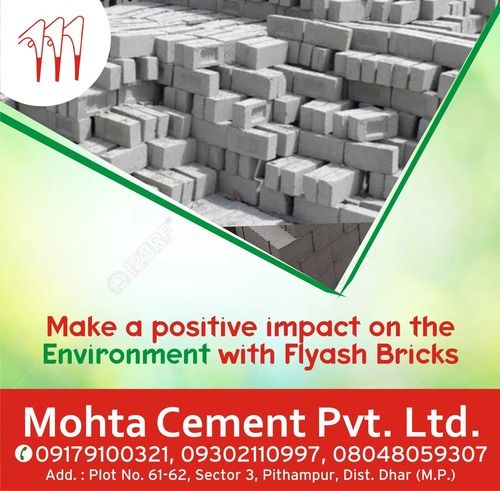
Tell us about your requirement

Price:
Quantity
Select Unit
- 50
- 100
- 200
- 250
- 500
- 1000+
Additional detail
Mobile number
Email

More Products in Fly Ash Bricks for Building Construction Category
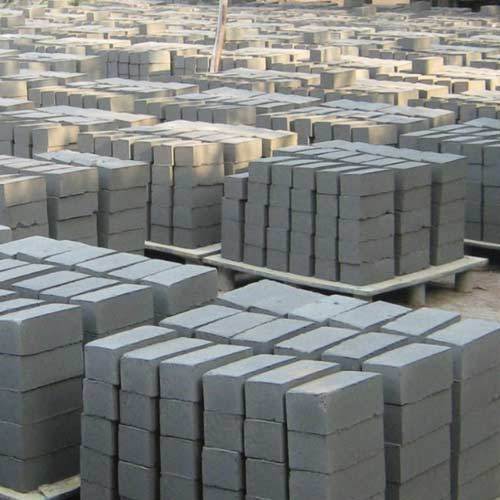
Flyash Bricks
Price 05 INR / Piece
Minimum Order Quantity : 3000 Pieces
Thickness : 75 mm
Color : Other , Grey
Bricks Type : Concrete Bricks
Type : Other, Solid
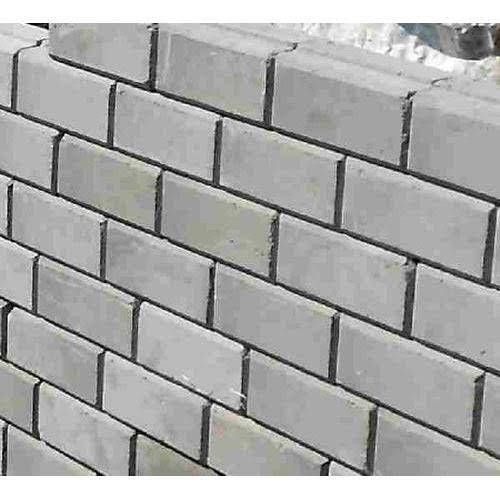
Rectangular Fly Ash Bricks
Price 5 INR / Piece
Minimum Order Quantity : 3000 Pieces
Thickness : 75 mm
Color : Other , Ash Grey
Bricks Type : Other, Solid
Type : Other, Building Material
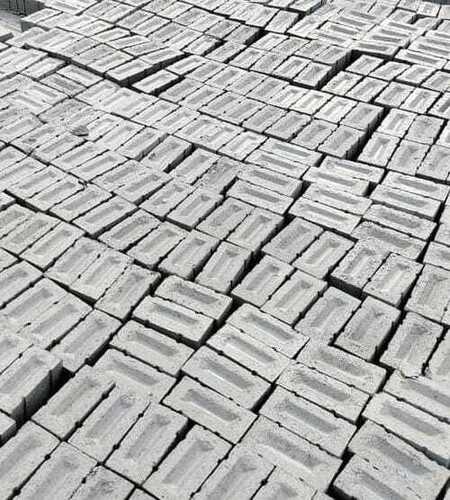
Ecofriendly Flyash Bricks
Price 5 INR / Piece
Minimum Order Quantity : 3000 Pieces
Thickness : 75 mm
Color : Gray
Bricks Type : Other, Solid
Type : Other, Ecofriendly Construction Brick
Fly Ash Bricks Vs Clay Bricks
Price 5 INR / Piece
Minimum Order Quantity : 3000 Pieces
Thickness : Fly Ash Bricks: Uniform; Clay Bricks: Often Varying
Color : Other , Fly Ash Bricks: Grey; Clay Bricks: Red
Bricks Type : Other, Fly Ash Bricks: Solid; Clay Bricks: Solid
Type : Other, Fly Ash Bricks: Machine Made; Clay Bricks: Handmade

"We are only dealing in Madhya Pradesh"

 Send Inquiry
Our Products


Samyak Tower, 16/3, Old Palasia,Indore - 452018, Madhya Pradesh, India

Mr Gaurav Mohta
(Director)
Mobile :07971670859
 Send Inquiry
 Send SMS
 Call Me Free
Developed and Managed by Infocom Network Private Limited.


